Will the clouds clear in time?
A solar eclipse is a once-in-a-lifetime experience for many, particularly in the region of a total solar eclipse ("totality"). Some people travel around the world to see them, so it would be a shame for that experience to be spoiled by clouds blocking it [1].
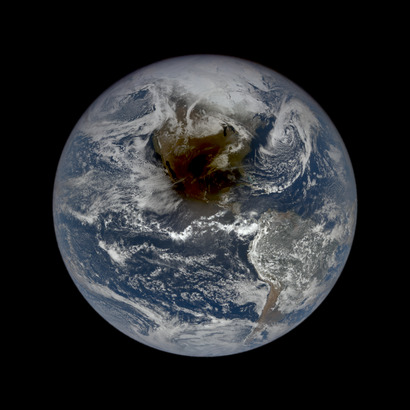
A view of the 2024 eclipse over the USA from the EPIC camera on the DSCOVR mission (sitting at the L1 point, between the Earth and the Sun). NASA
There are many stories of people waiting for eclipses under cloud, only for the cloud to clear just in time (I have my own from the 1999 eclipse). It turns out that this not just in a few cases, but solar eclipses have been regularly observed to reduce clouds - as long as the clouds are the right type.
Dark in the daytime
By blocking out the Sun with the Moon, eclipses make it darker at the surface. This produces a significant cooling, in some cases several degrees. Some of the earliest records of this come from the astronomer Edmond Halley, who compiled observations of the solar eclipse of 1715 over the UK and noted the "Chill and Damp that attends the darkness of the eclipse." [2]
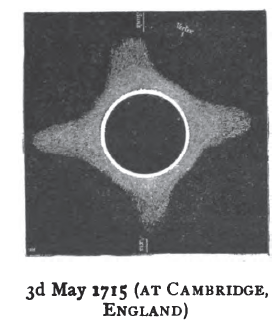
A drawing of the 1715 eclipse, from Total Eclipses of the Sun, by Mabel Loomis Todd

Starting from the eclipse in 1836, observations of atmospheric changes are a lot more common. The air temperature near the ground typically decreases by a few degrees C over land, but with reductions as large as 7C being measure in some cases. The coldest temperatures usually come a bit after totality (5-30min, depending on the local weather and surface conditions). Colder temperatures also increase humidity and can create a change in the wind - an "eclipse wind".
Clouds from heating
Small cumulus clouds sit ontop of an invisible plume of rising air - the cloud is just the bit that is visible (when the water starts to condense into droplets). These plumes of air start as the sun heats the ground and so the air nearby. As the air heats up, it becomes less dense and so can rise, initially as a dry/non-cloudy "thermal", before producing a cloud if conditions are right.
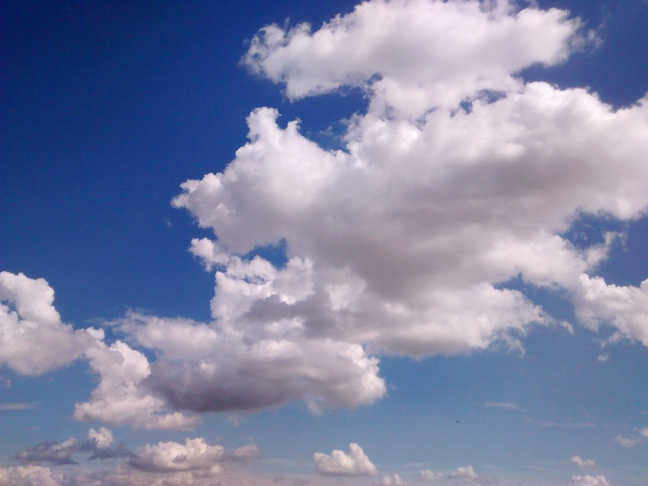
A small cumulus cloud, sitting ontop an invisible plume or bubble of rising air (known as a thermal).
This heating effect is why cumulus clouds are less common at sunrise, but gradually appear through the day. If the surface heats enough and there is enough moisture around, these clouds can grow large enough to form towering thunderstorms.
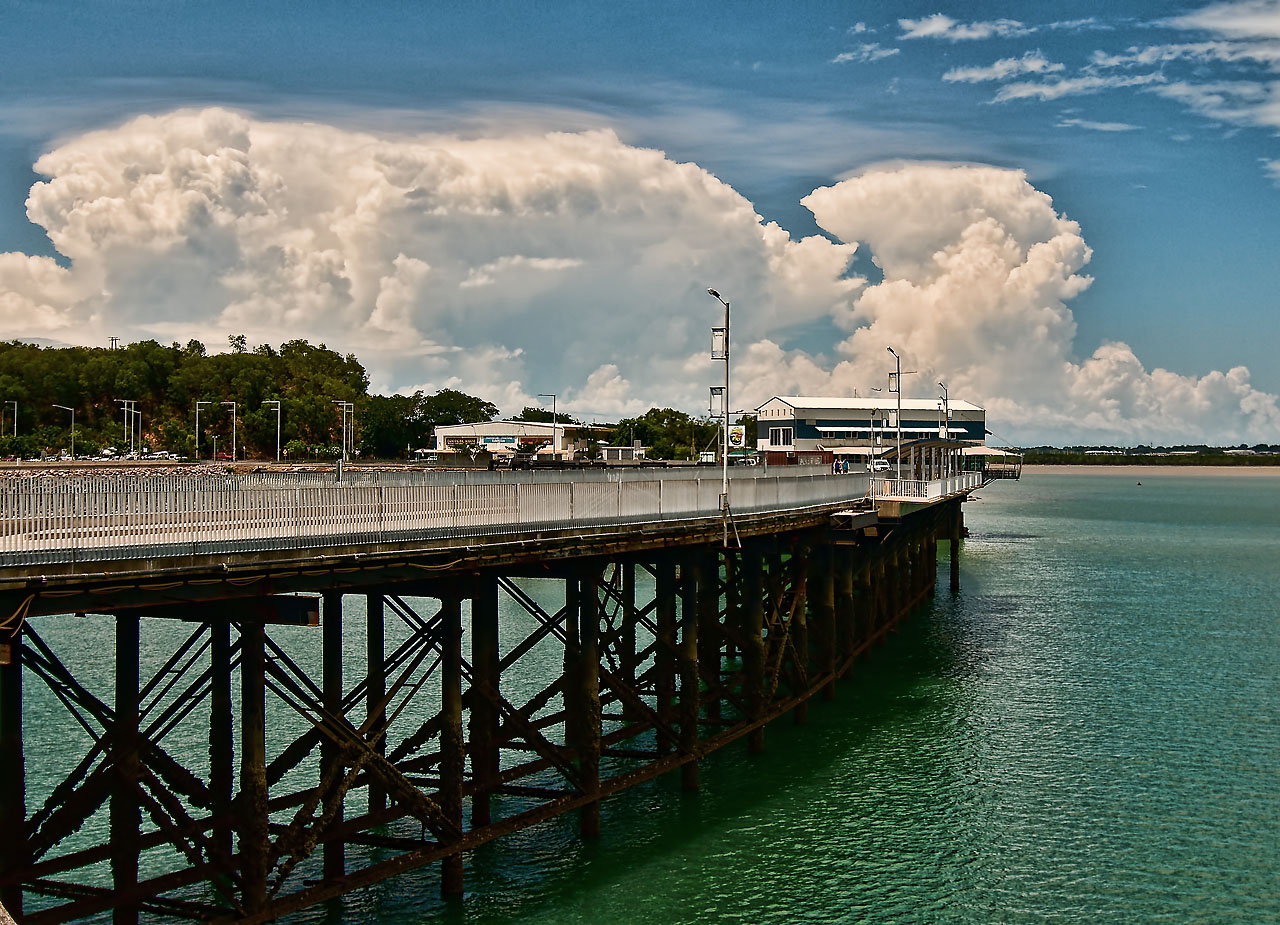
Hector - a cloud the forms regularly nearly every afternoon on the Tiwi Islands, driven by the heating from the sun (Wikimedia/Djambalawa)
#/media/File:HectorCloud.jpg)
The heating effect is essential to form these clouds - as water is harder to heat up than land (rivers and lakes can stay cool even on very hot days), cumulus clouds are less frequent over rivers. If the heating is removed (such as during an eclipse, it can shut-off the formation of these clouds.
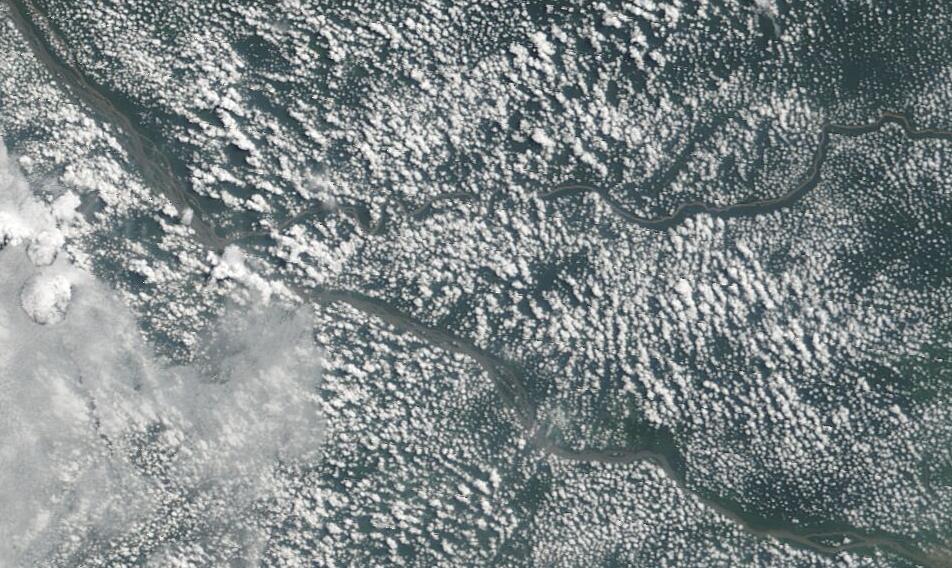
A MODIS image of the river Congo downstream of Kisangani (bottom right). Note how the clouds line up along the river edges. NASA Worldview
Clear-sky eclipses
The significant cooling during an eclipse can remove just enough of the heating effect to stop the formation of small cumulus clouds.
As it is dark during the eclipse, we cannot (easily) use visible light images to see clouds, but we can see these clouds with infra-red, which effectively measures the temperature of the object [3]. As cumulus clouds are typically within 1-2km of the Earth's surface, they are only a few degrees colder than the surface, but this is just enough to be seen from space.
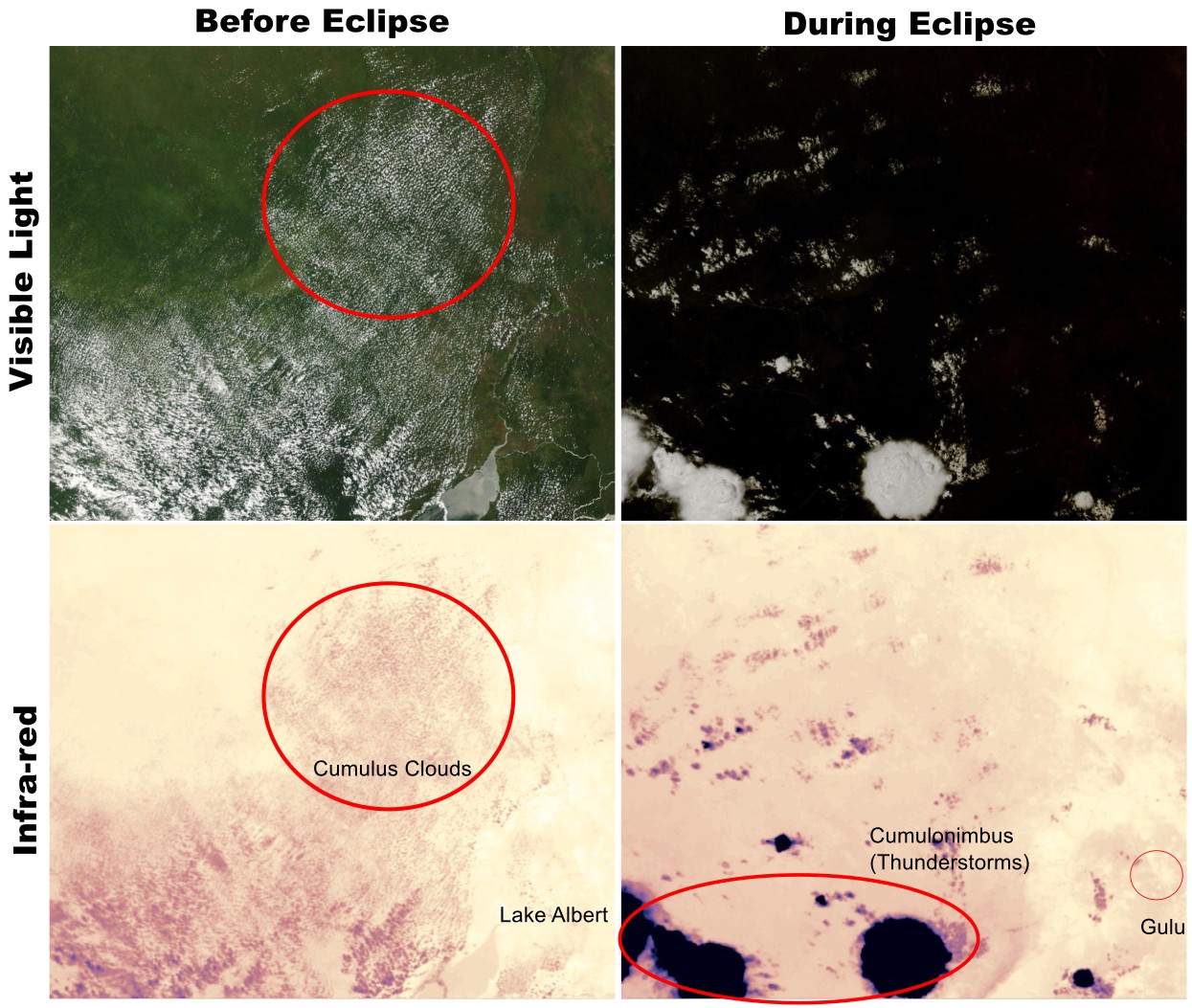
Visible and infra-red images of the 2005 eclipse over northern Uganda/eastern Democratic Republic of Congo from the MODIS instrument. The first left images show the clouds a few hours before the eclipse, the right two during the eclipse. Darker colours are colder/higher objects in the infrared image - small cumulus clouds appear as a dark pink. Note that the visible image has been enhanced during the eclipse, making the high clouds more visible.
If you account for the reduction in sunlight during the eclipse, it is possible to measure this effect in more detail. The clouds start disappearing at around 15% obscuration (coverage of the sun by the moon), with the largest reduction happening around/a little after totality [4].
Cloudy? Don't give up just yet
So if there are cumulus clouds around for the eclipse, they might disappear just in time - fingers crossed!
Unfortunately, not all clouds form the same way. High level cirrus clouds (for example) and nimbostratus clouds from mid-latitude storm systems care much less about surface heating. These don't respond the same way to eclipses and are unlikely to change.
While clouds cover almost two thirds of the Earth, they are also very localised - just travelling a small distance might be enough to give you a great view of the eclipse. Good luck!
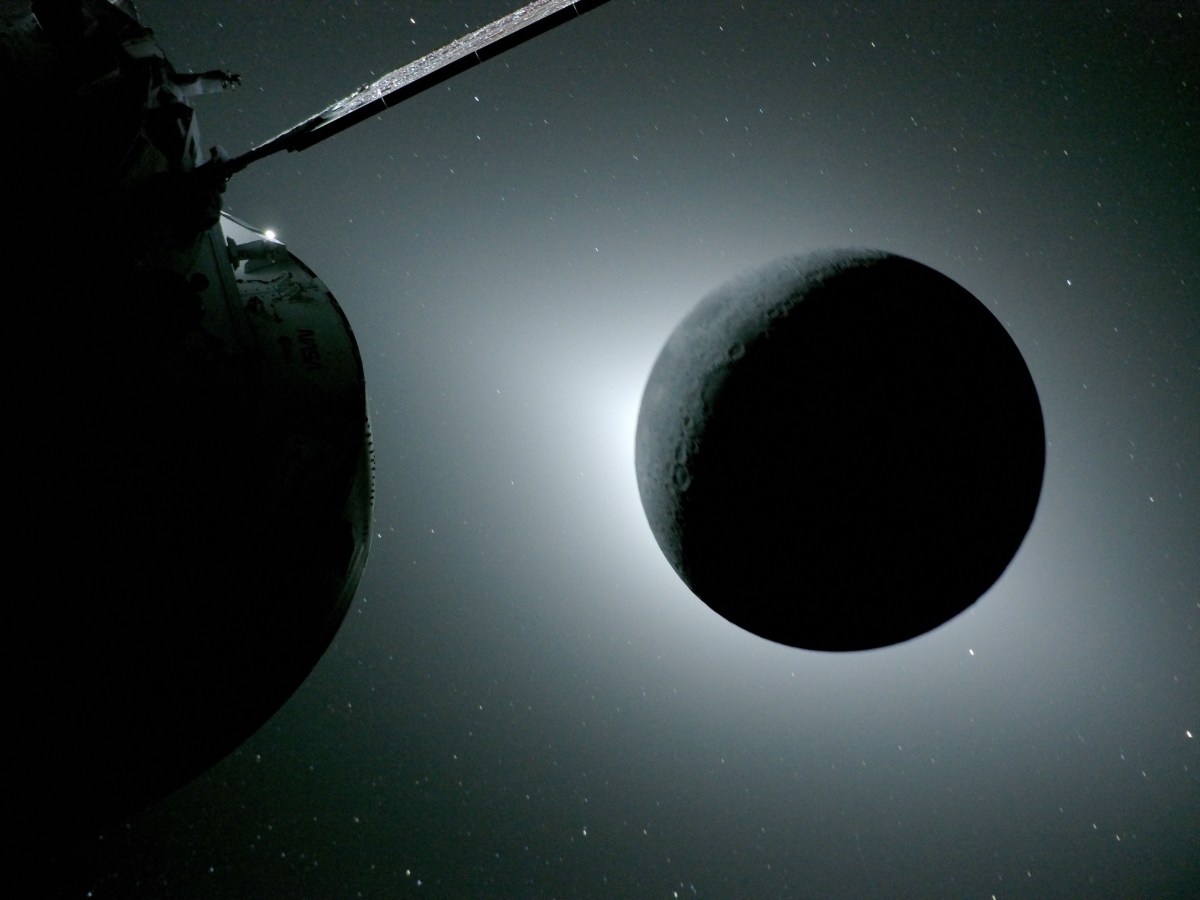
A solar eclipse as viewed by the Artemis II mission in April 2026. You probably don't have to travel this far to find cloud-free conditions.
Comments by email
Notes
| [1] | I hesitate to suggest that clouds really spoil anything, but in this case, I reluctantly agree. |
| [2] | Aplin et al (2016) has a nice summary of earlier eclipse measurements. |
| [3] | This is only the case at wavelengths where the atmosphere is not strongly absorbing and where the object doesn't reflect lots of light. For Earth, we are lucky that 10-12um is perfect for this! |
| [4] | There is a great paper on this by Trees et al (2024) |